Research & Publications > The Hong Kong Practitioner > Clinical Quiz

Clinical Quiz (Please login 'Member Area' for online submission of latest issue)
Clinical Quiz September 2025
A 16-year-old boy presented with a hyperpigmented patch over his left
chest since puberty
Dr. Adrian KC Cheng
|
Readers are invited to participate in the Clinical Quiz*. Simply answer the question, fill in the reply slip and return it to the College by 20 November 2025. Each reader is allowed to submit one entry only.
*Note: There would be no prize award for this issue while sponsorship for Clinical Quiz has been ended in September 2020 issue. The answer of the Clinical Quiz for this issue will be announced in the next issue. Thank you for your support.
|
Clinical history:
A 16-year-old boy presented with a hyperpigmented patch over his left chest since puberty. Examination showed a brownish patch to thin plaque with irregular borders and mild hypertrichosis over his left upper chest. There were also a few superimposed acneiform papules. Dermoscopy showed a well-defined pigment network with uniform thickness of lines and perifollicular hypopigmentation.
What is the diagnosis?
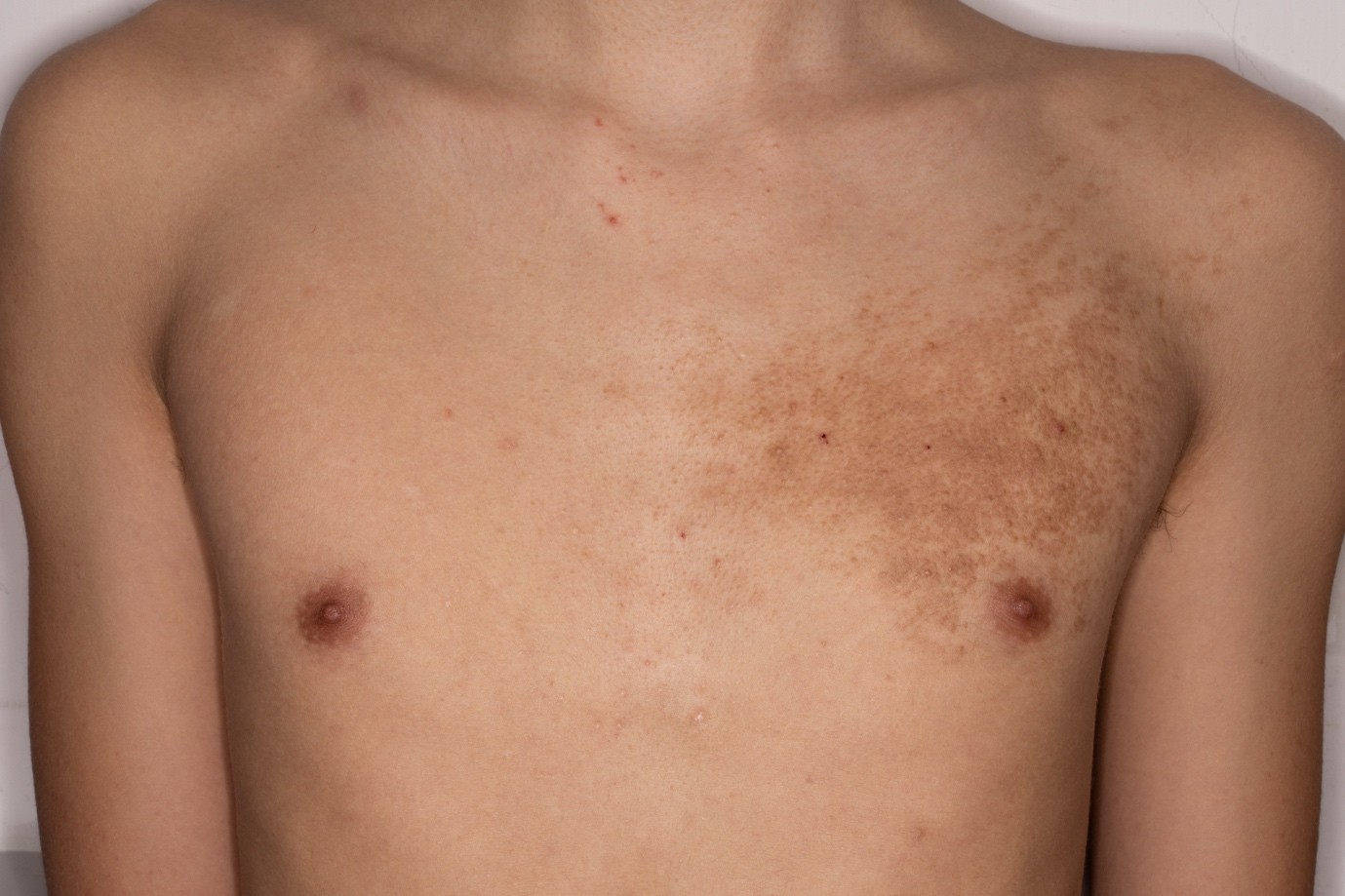
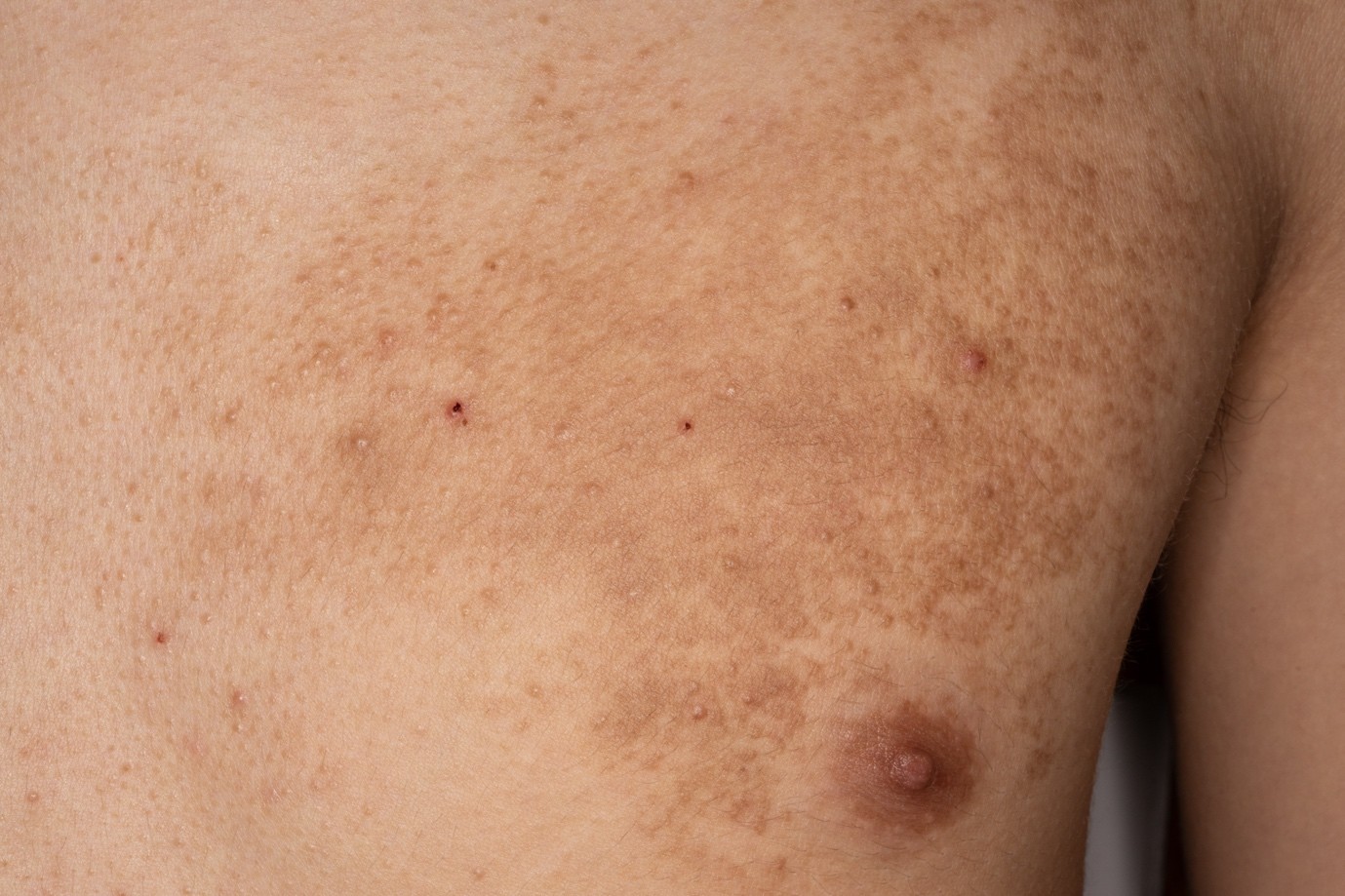
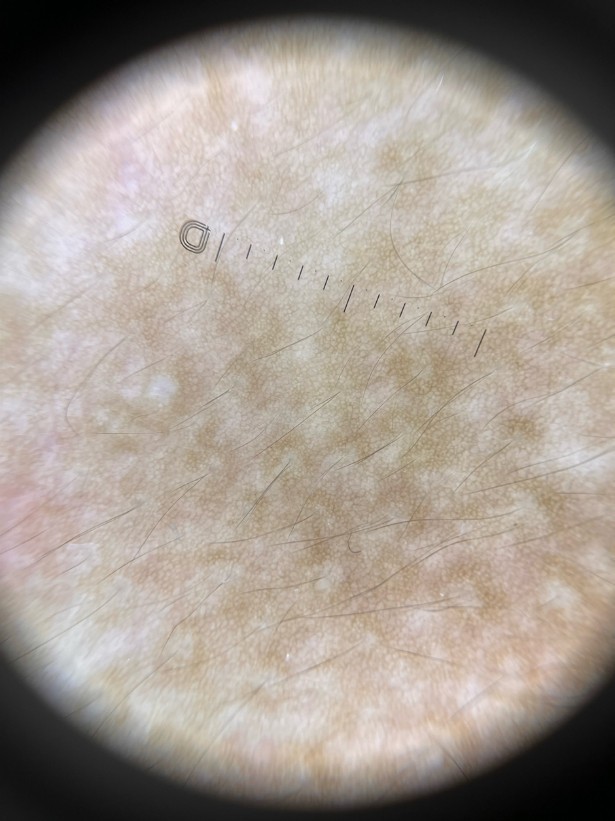
| A. | Becker melanosis |
| B. | Congenital melanocytic nevus |
| C. | McCune-Albright syndrome |
| D. | Neurofibromatosis |
Answer:
A. Becker melanosis
Becker melanosis typically presents during adolescence, often around puberty, as a unilateral, irregularly bordered hyperpigmented patch or thin plaque on the upper trunk, chest, or shoulder. The presence of mild hypertrichosis and superimposed acneiform papules further supports the diagnosis, as Becker melanosis is androgen-sensitive and frequently shows increased hair growth and acneiform changes within the lesion.
Becker melanosis is a benign cutaneous hamartoma involving epidermal melanocytes, hair follicles, and dermal smooth muscle. It shows a strong male predominance and usually appears around puberty due to increased androgen receptor expression within the lesion. The condition may be isolated or associated with developmental anomalies in Becker nevus syndrome, including ipsilateral breast hypoplasia, skeletal deformities, or muscular abnormalities.
The condition is benign and non-progressive, and treatment is usually for cosmetic reasons only. Laser therapies targeting pigmentation and hair growth may offer partial improvement, though responses are variable. Routine surveillance is generally not required.
The slide and the question were prepared by:
Dr. Adrian KC Cheng, MBBS(HK), MRCP(UK), MSc GEOR (CUHK), FHKCP, FHKAM (Medicine)
Specialist in Dermatology & Venereology;
Associate Consultant,
Division of Dermatology, Department of Medicine, Queen Mary Hospital, Hong Kong SAR
Back