


Hyperpigmented plaques over forearms in a teenage girl with atopic dermatitis
Adrian KC Cheng 鄭嘉俊
|
Readers are invited to participate in the Clinical Quiz*. Simply answer the question, fill in the reply slip and return it to the College by 19 August 2026. Each reader is allowed to submit one entry only. *Note: There would be no prize award for this issue while sponsorship for Clinical Quiz has been ended in September 2020 issue. The answer of the Clinical Quiz for this issue will be announced in the next issue. Thank you for your support. |
Clinical history:
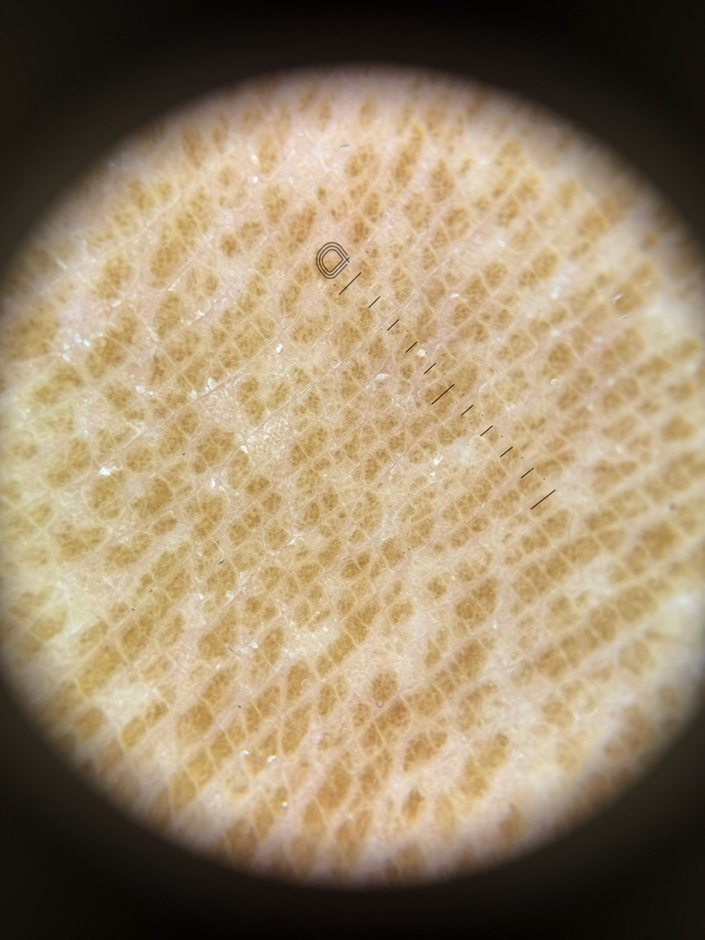
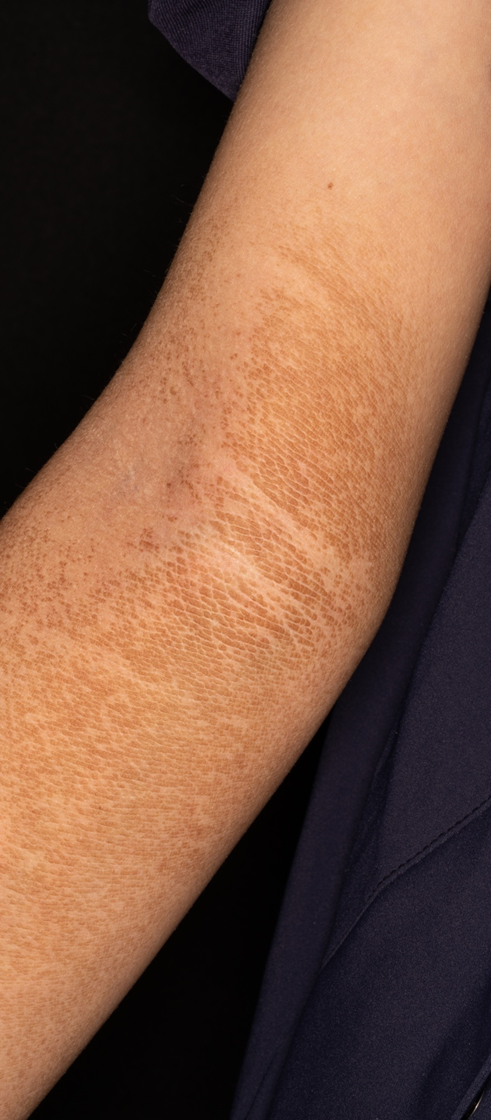
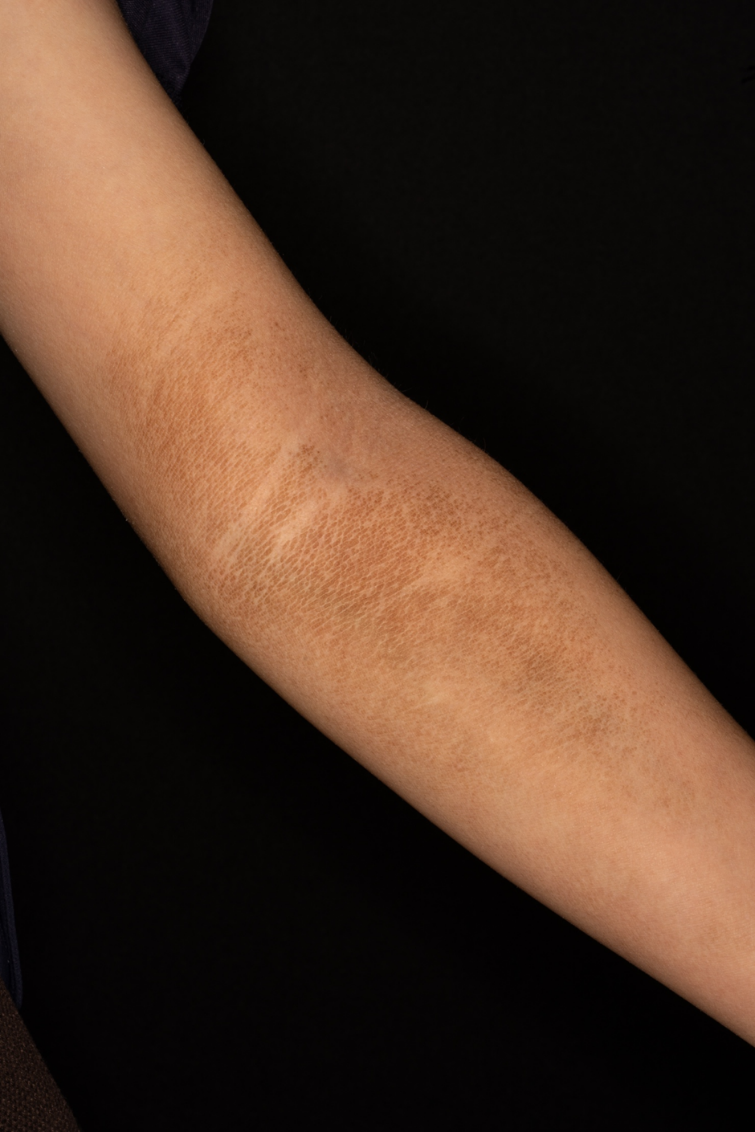
A teenage girl with a history of atopic dermatitis complained of hyperpigmentation over her upper limbs for several months. She was unable to remove the pigmentation by soap and water. Examination revealed coalescing brownish thin plaques distributed symmetrically over her antecubital fossae and volar forearms. Dermoscopy showed polygonal brownish scales.
What is the diagnosis?

| A. | Acanthosis nigricans |
| B. | Terra-firma forme dermatosis |
| C. | Post-inflammatory hyperpigmentation |
| D. | Confluent and reticulated papillomatosis |
The slide and the question was prepared by:
Dr. Adrian KC Cheng, MBBS(HK), MRCP(UK), MSc GEOR (CUHK), FHKCP, FHKAM (Medicine)
Specialist in Dermatology & Venereology;
Associate Consultant,